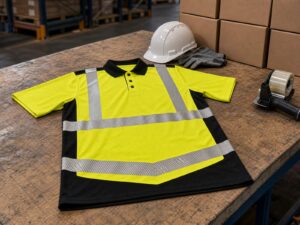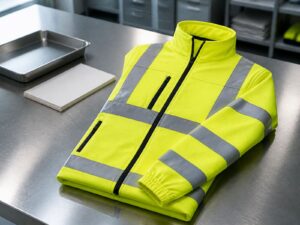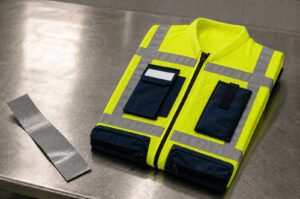


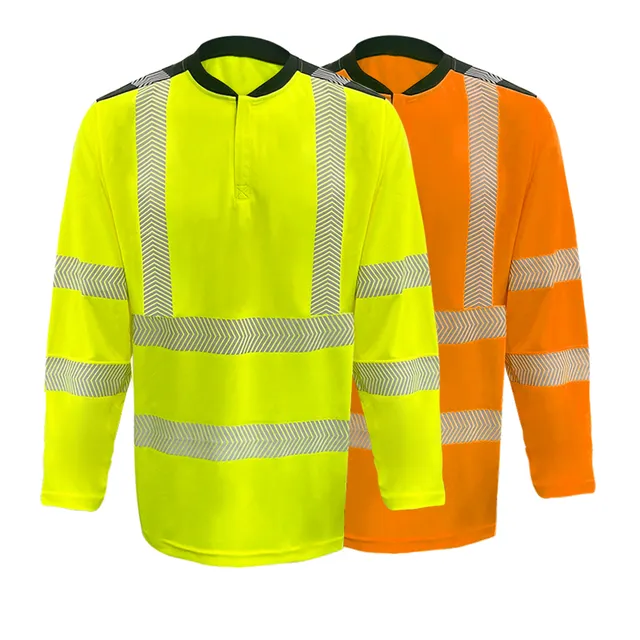
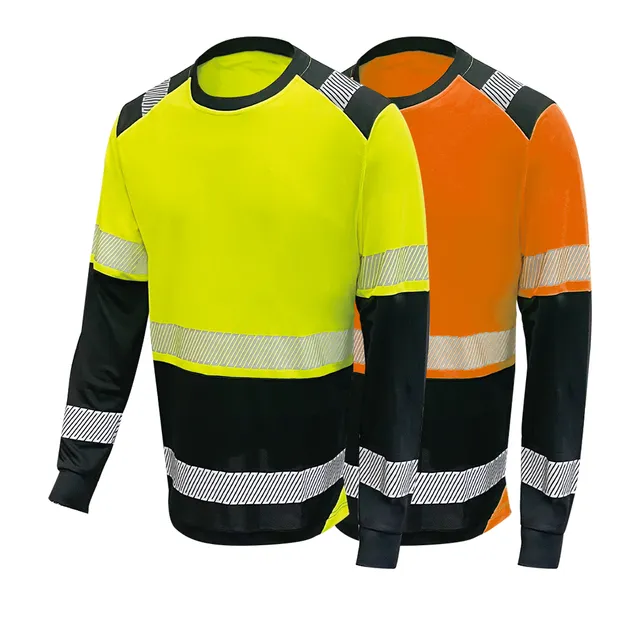
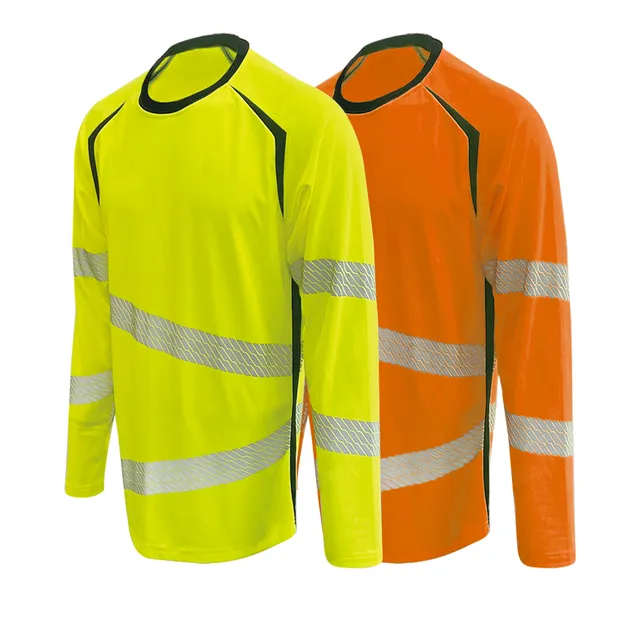
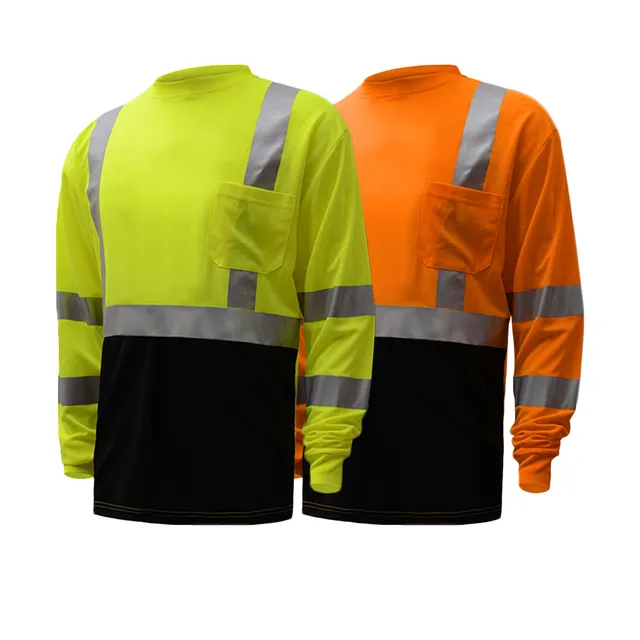
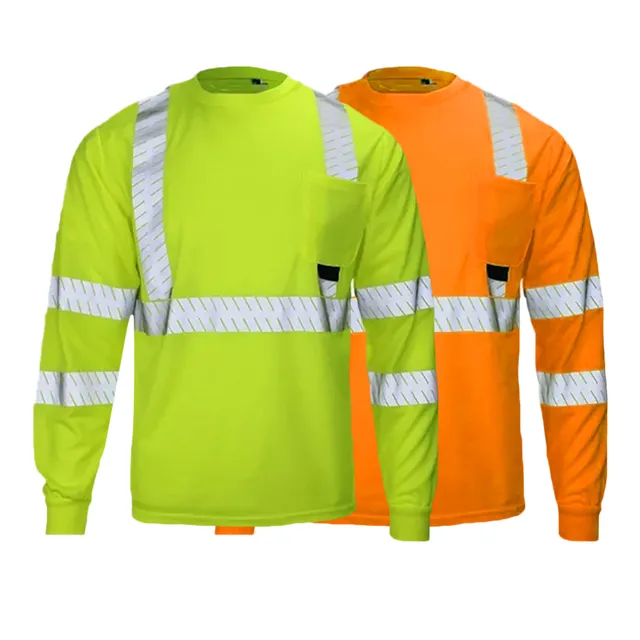
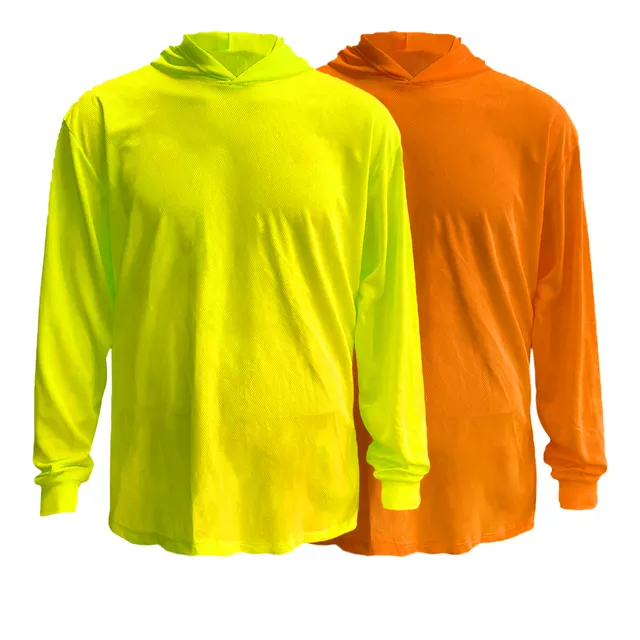

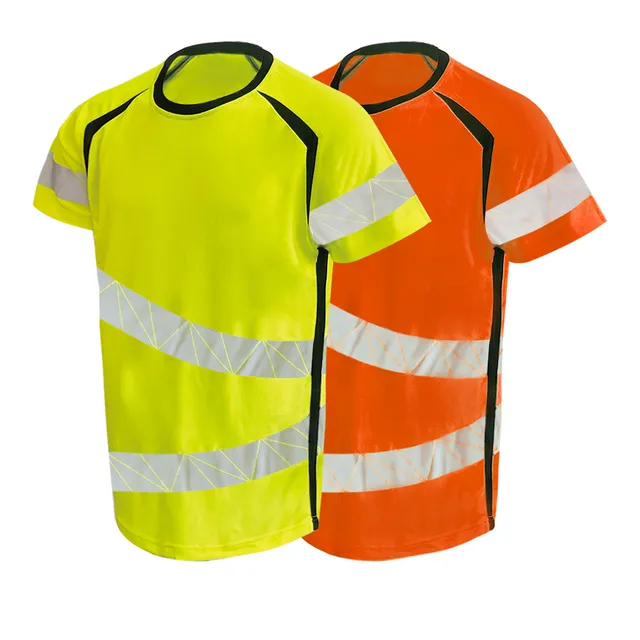

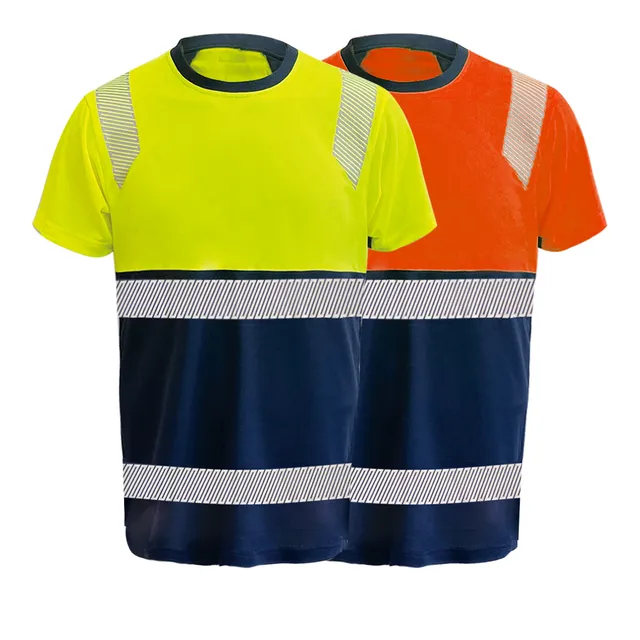
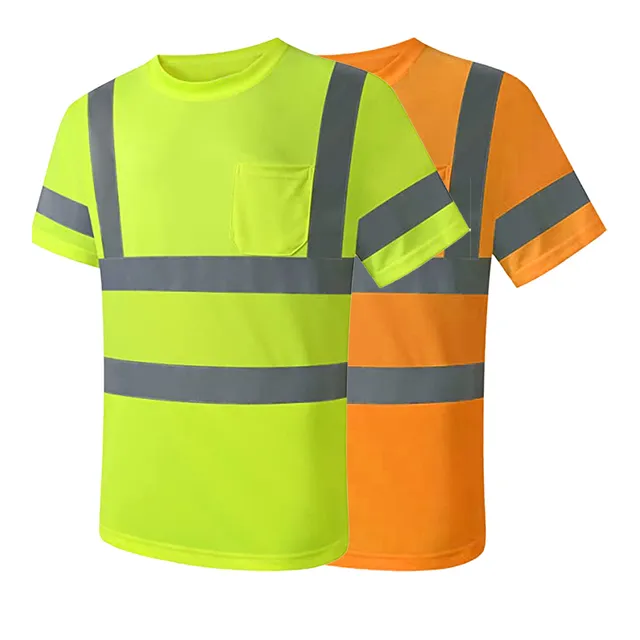


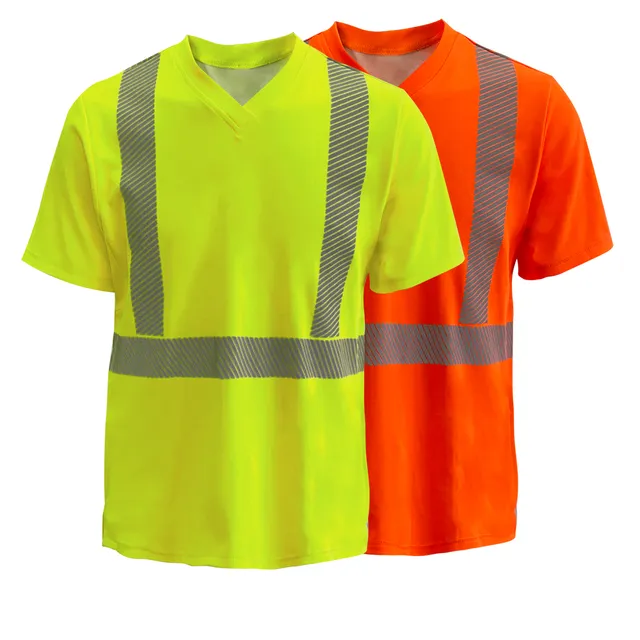
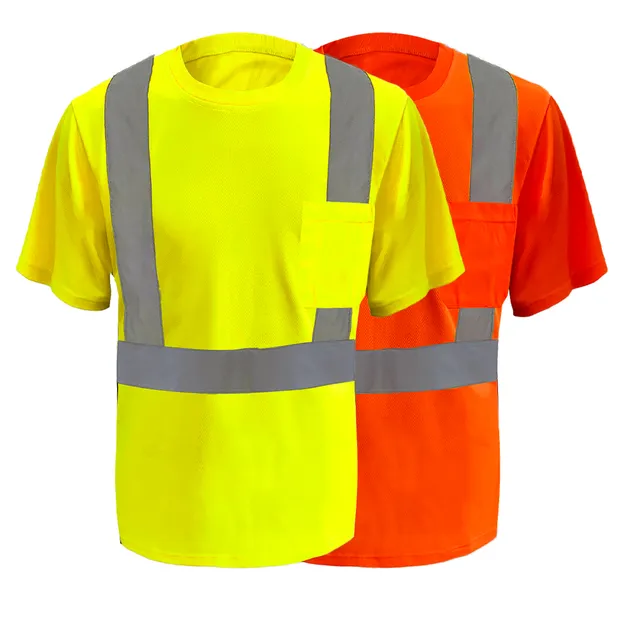


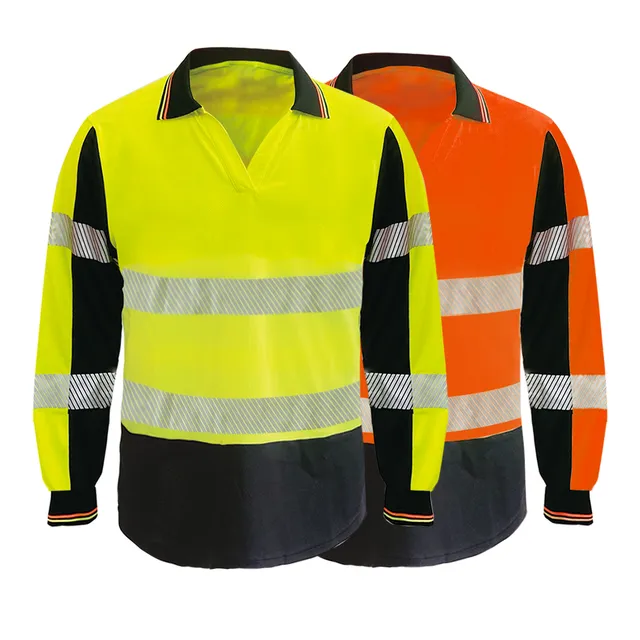
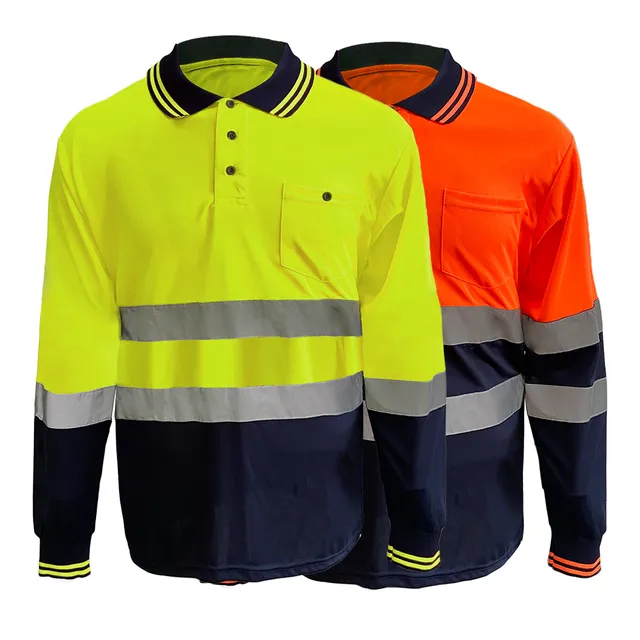
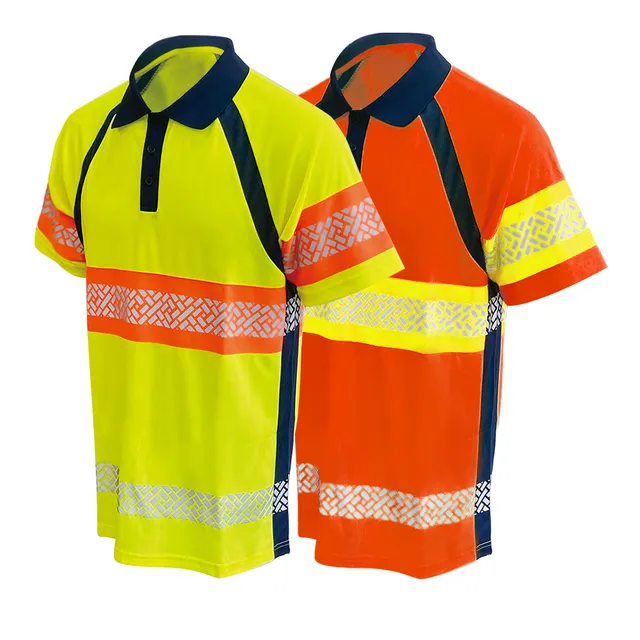
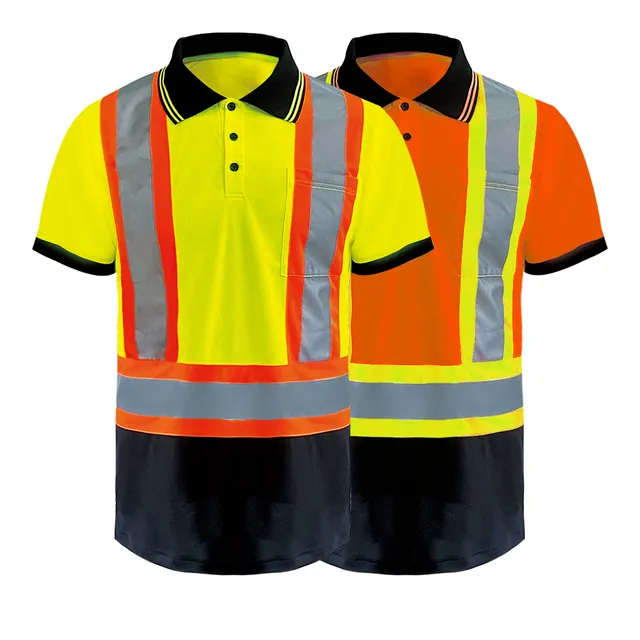
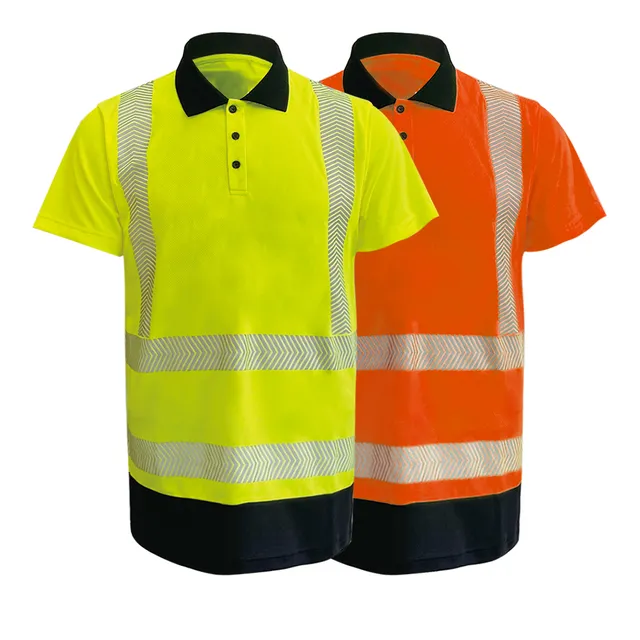

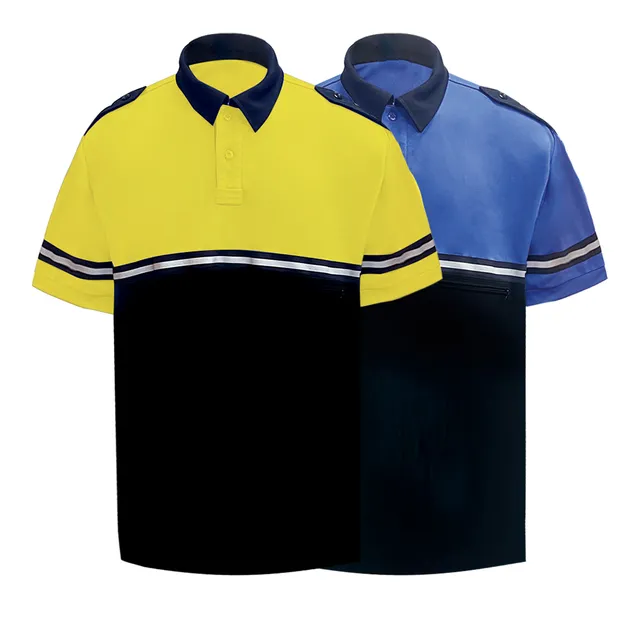


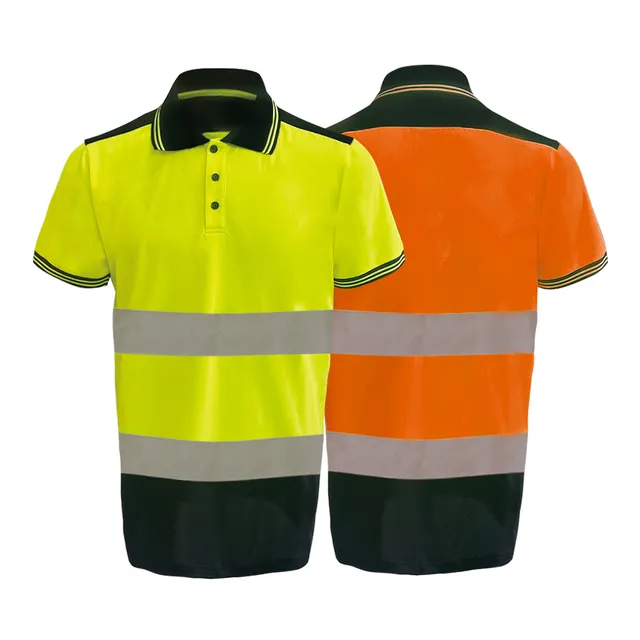


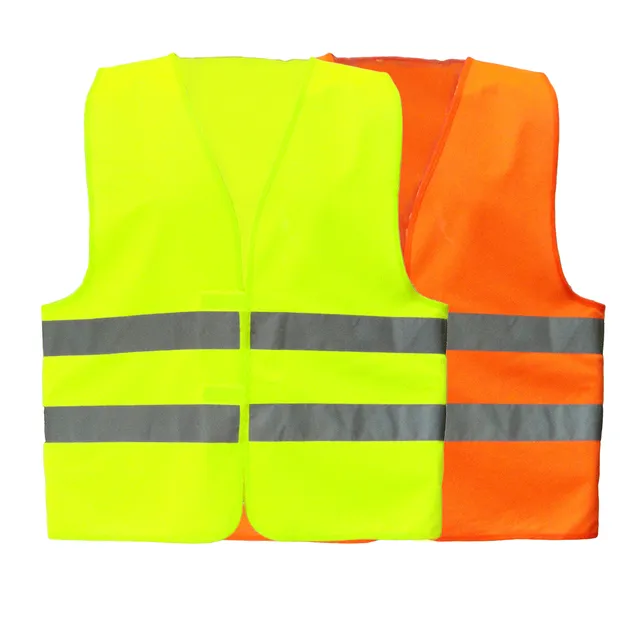

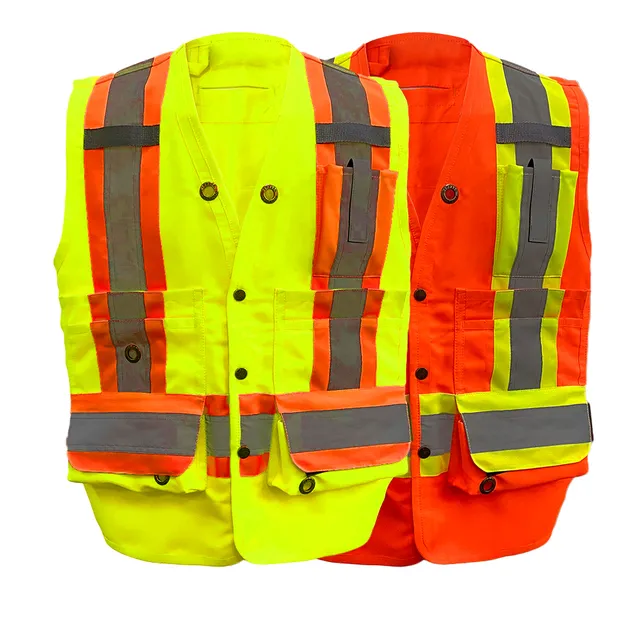
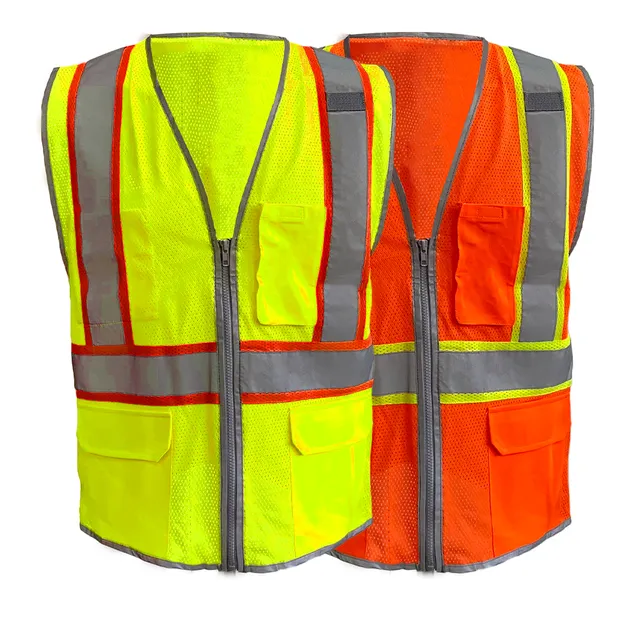
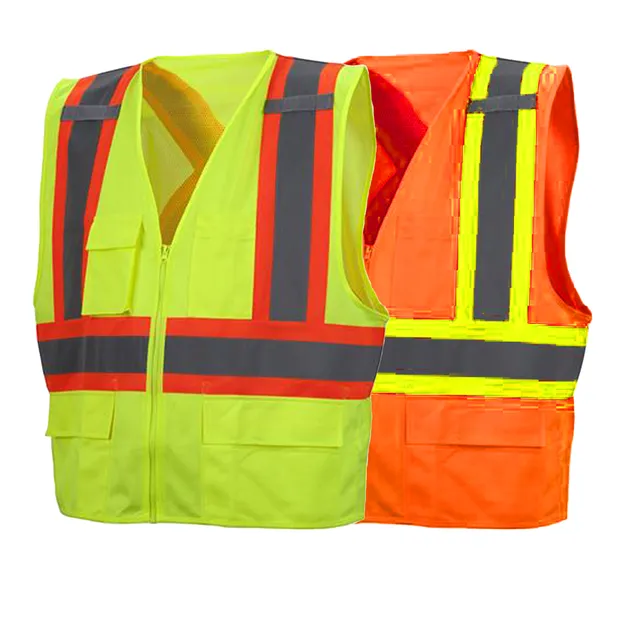
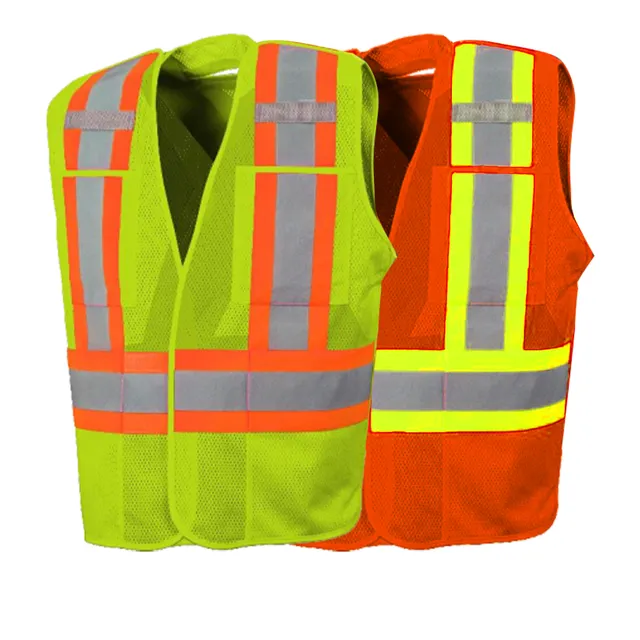

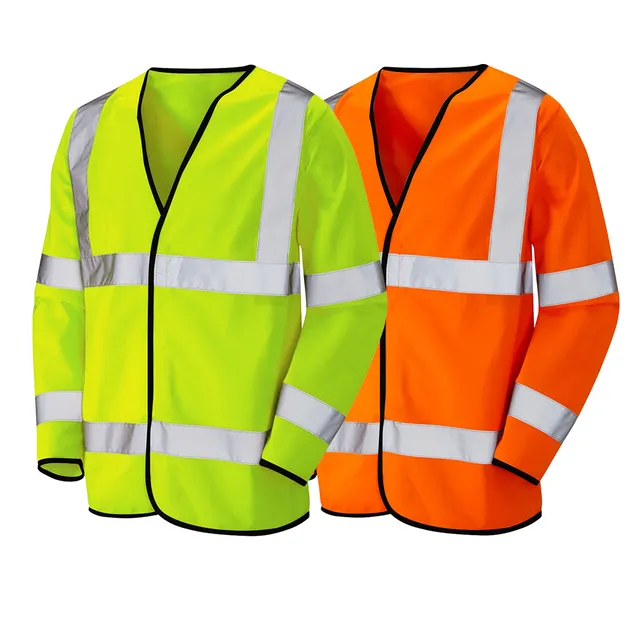
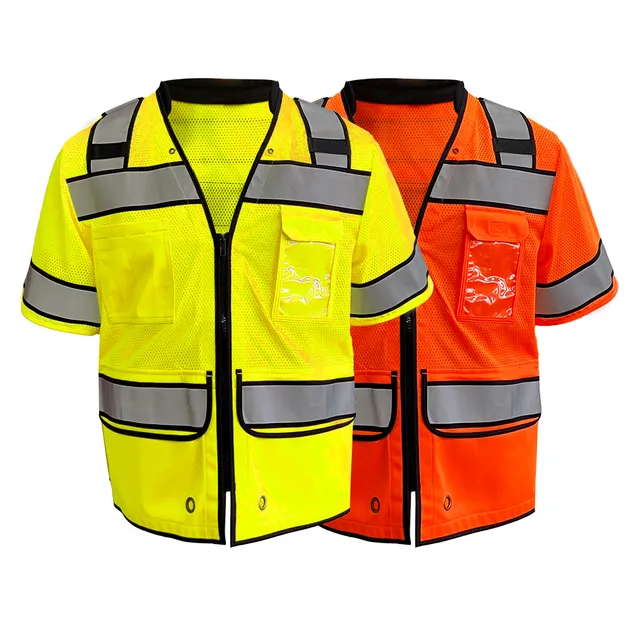
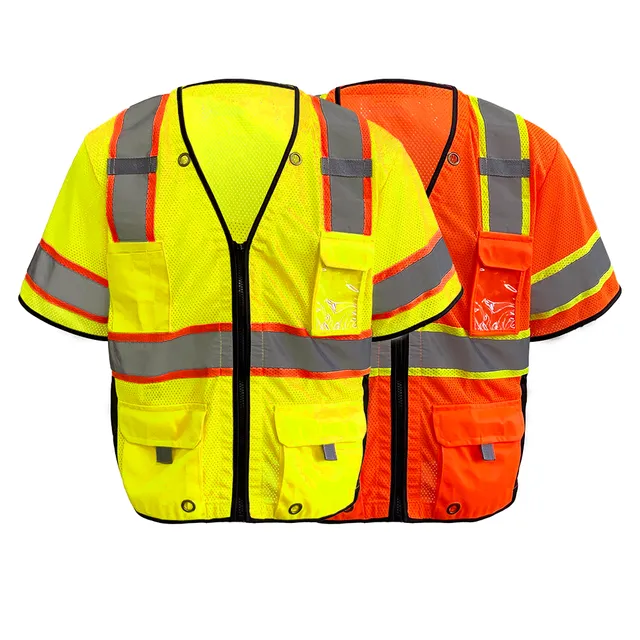
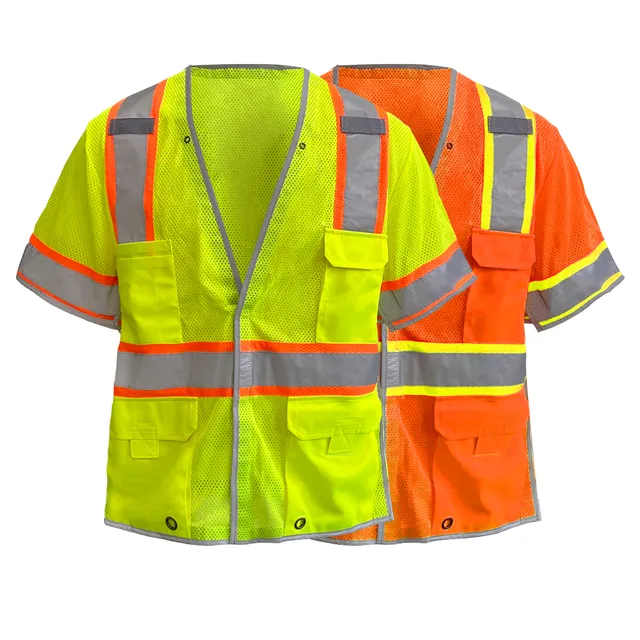
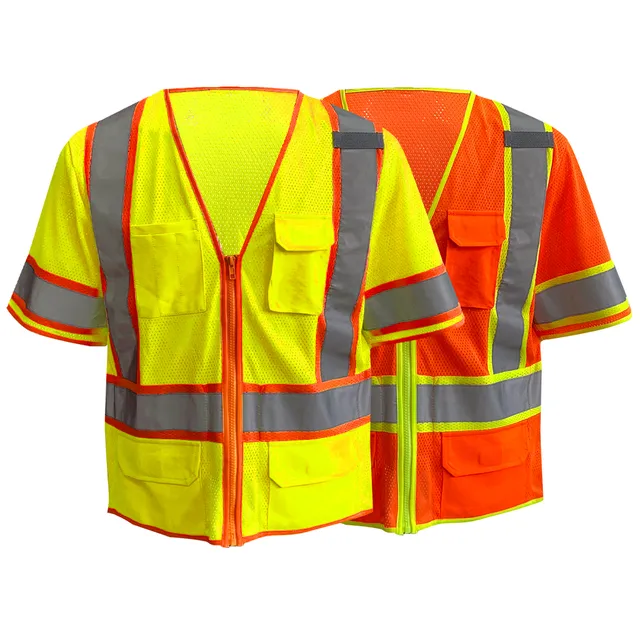
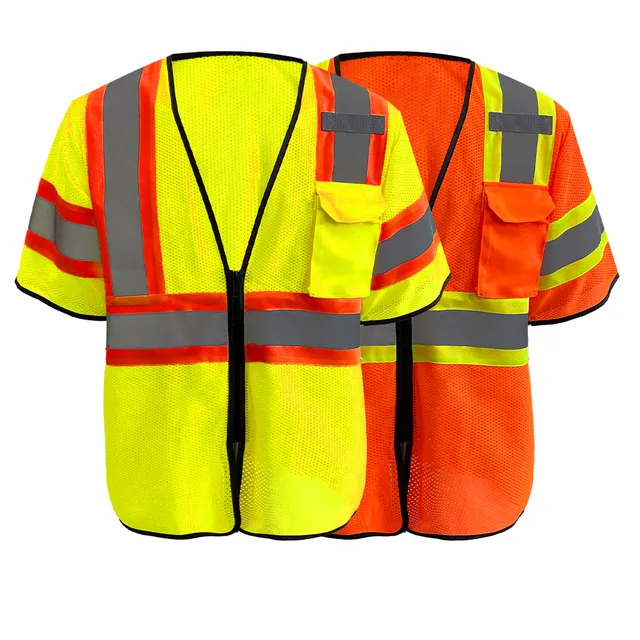
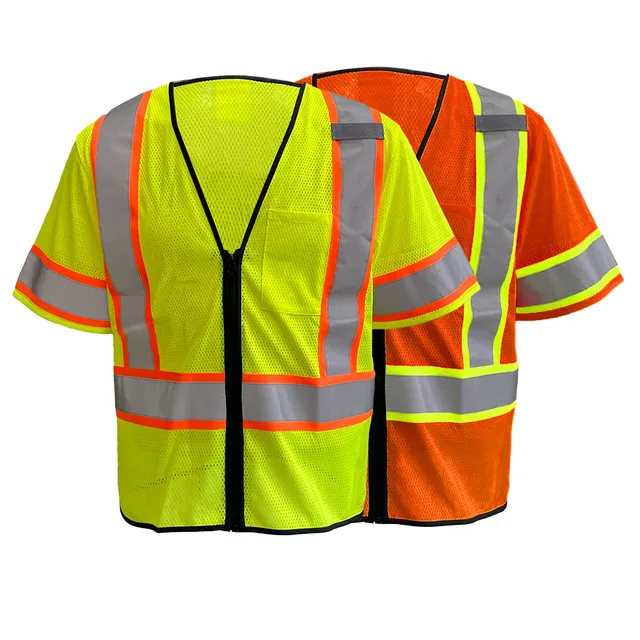

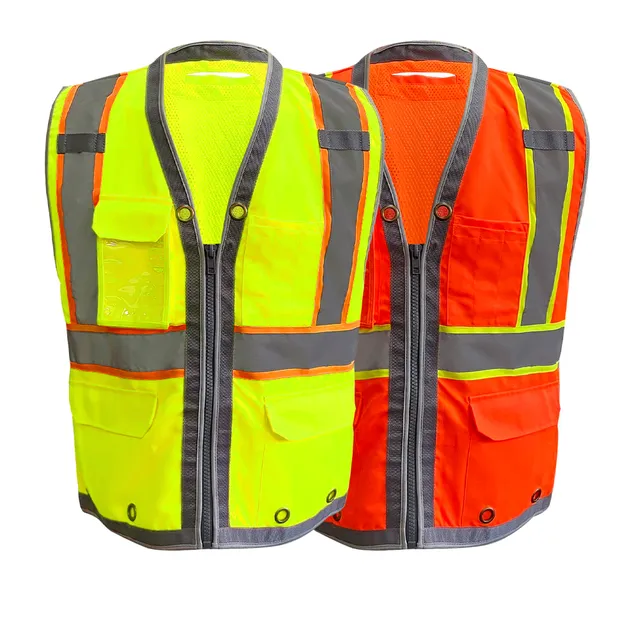
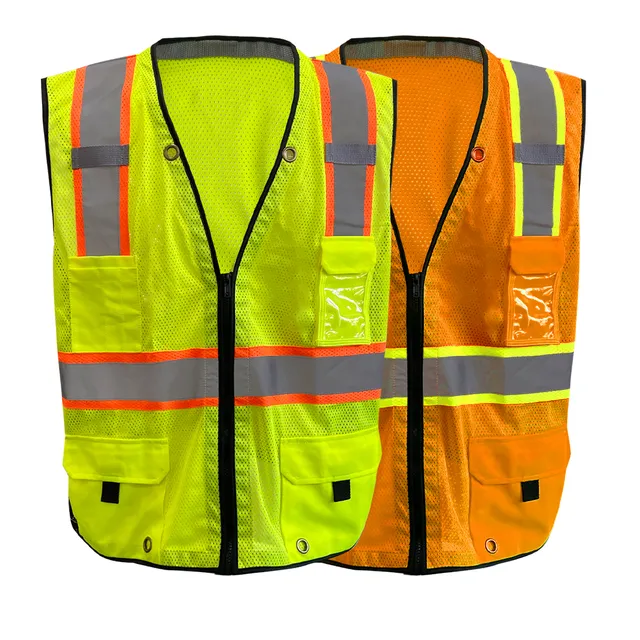
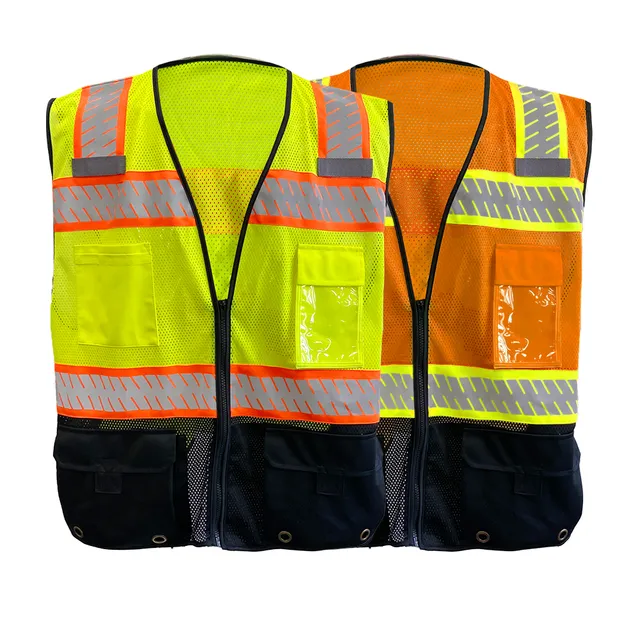
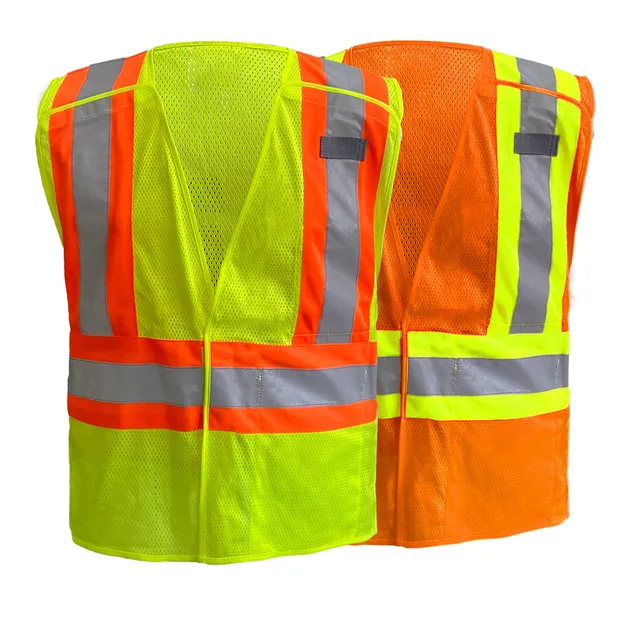
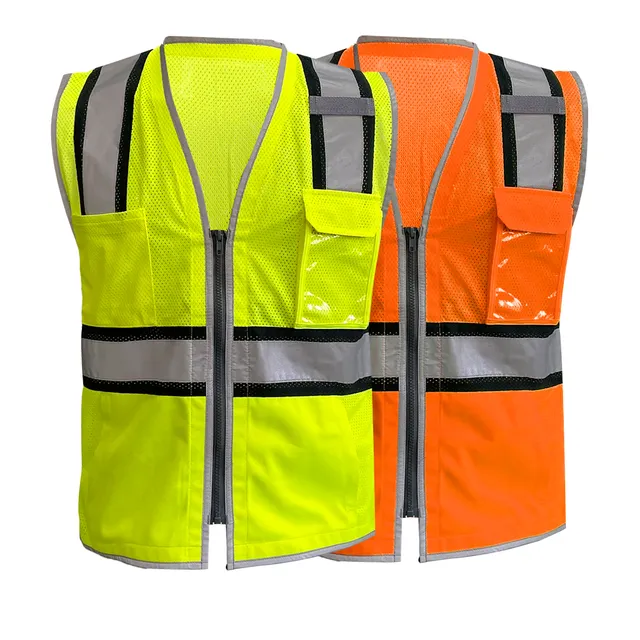
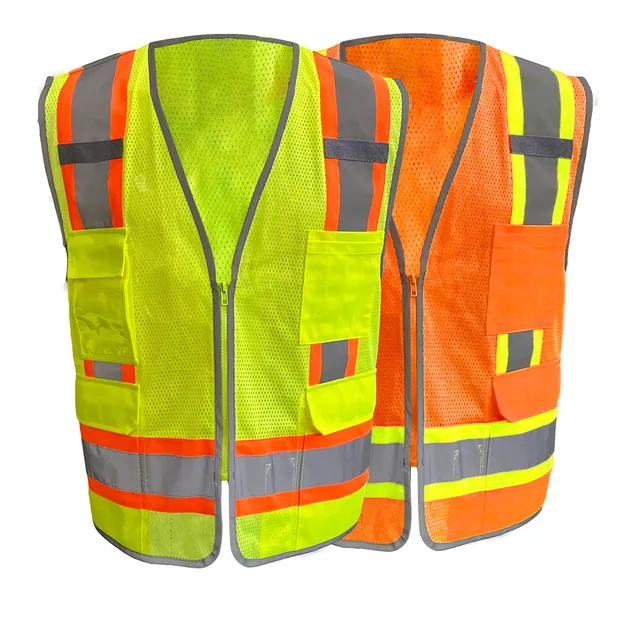
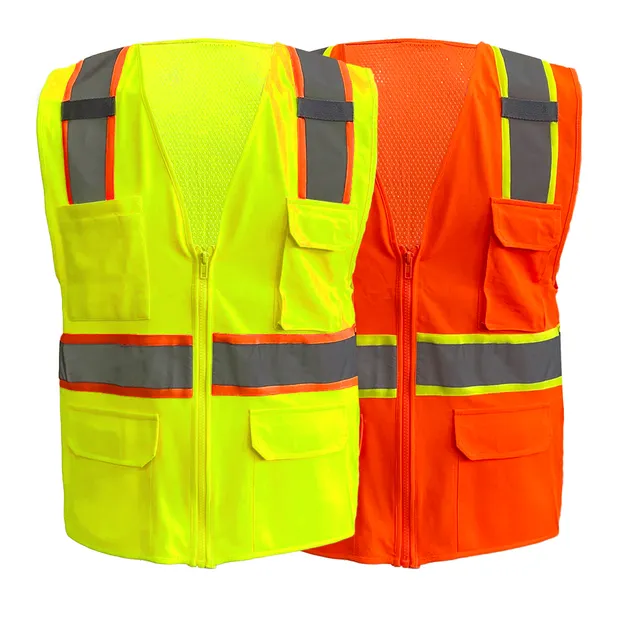
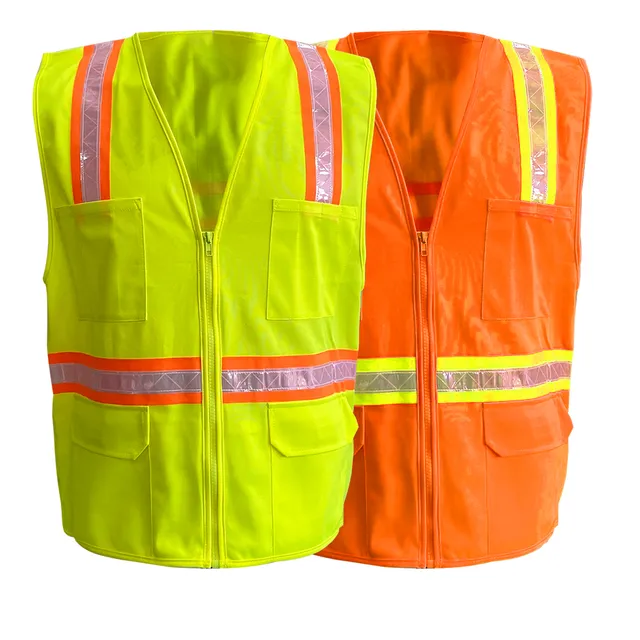
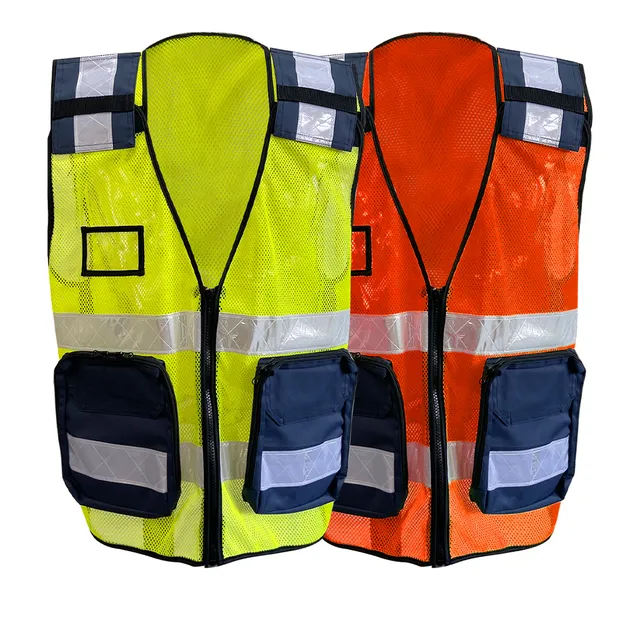
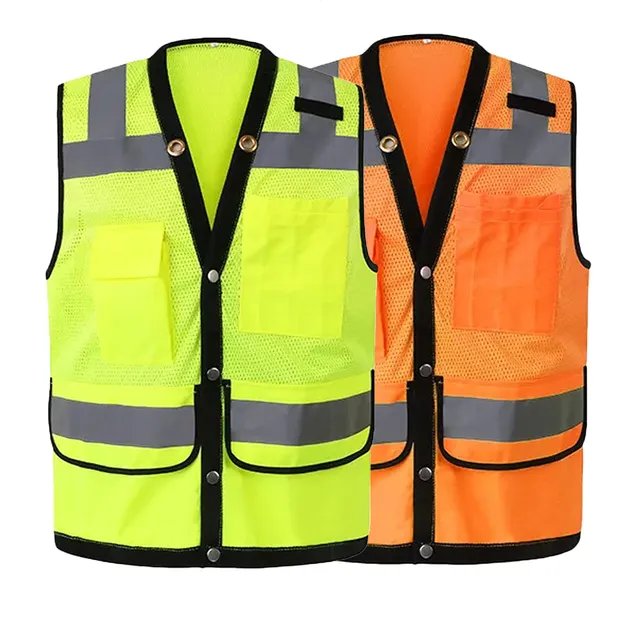
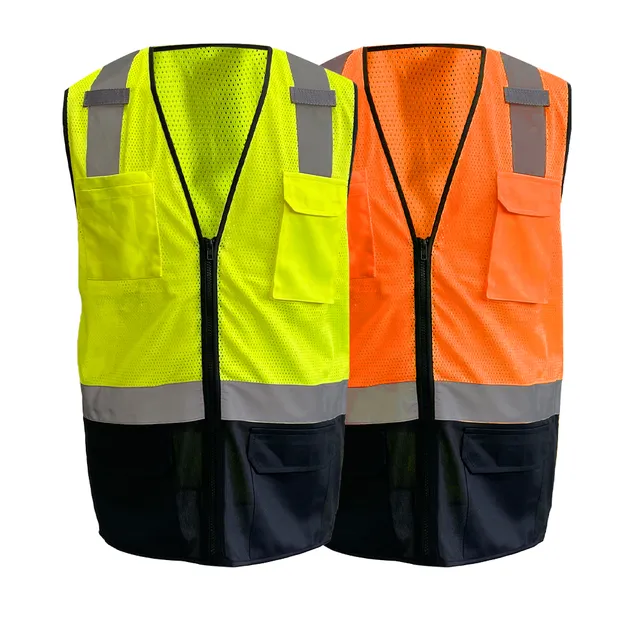
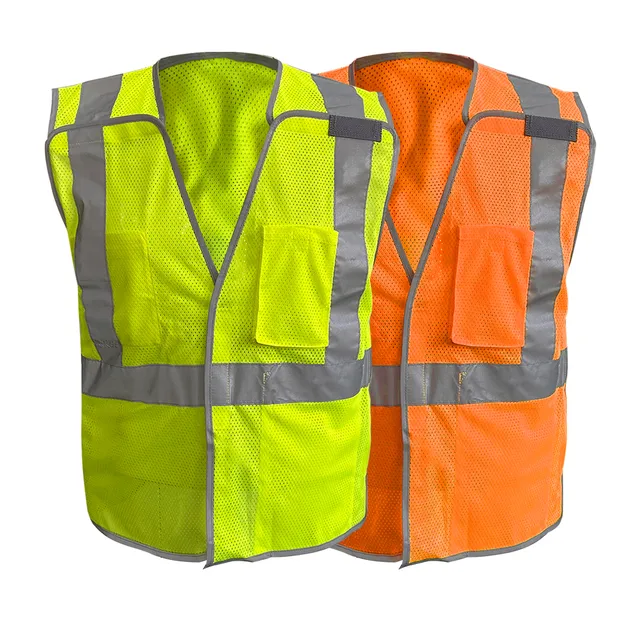
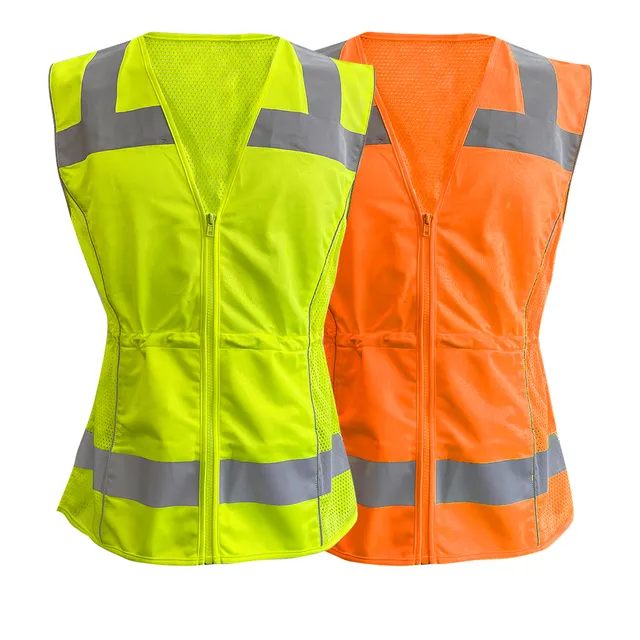
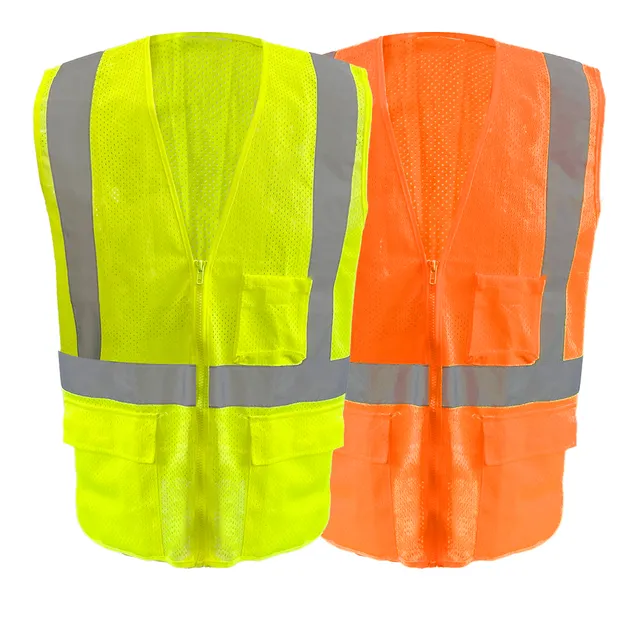
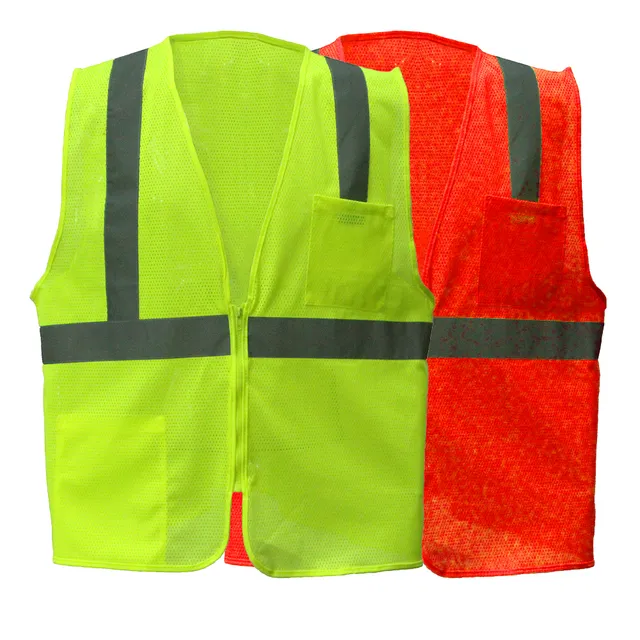







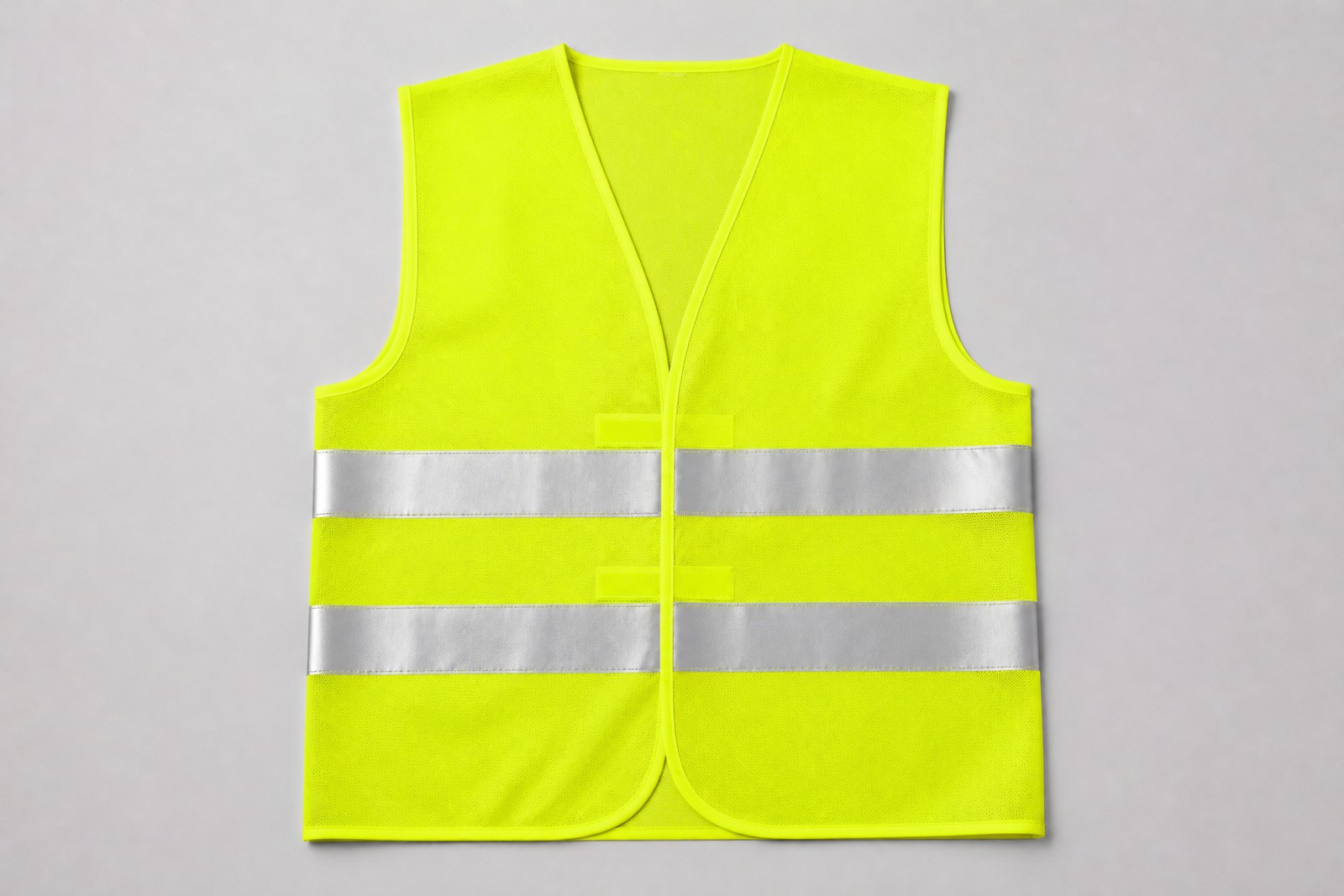
The hi vis vest unit cost factors that move a quote most are not the ones buyers usually negotiate. Fabric weight, tape grade, class-driven tape metres, closure type, pocket count, decoration and order quantity set the price long before margin is discussed.
Hi Vis Vest Unit Cost Factors: Where the Money Sits
A basic Class 2 mesh vest and a Class 3 surveyor vest can leave the same factory at very different prices, because they are not the same bill of materials. The table ranks the drivers by how much they normally move a unit price.
| Hi Vis Vest Unit Cost Factors | What moves it | Effect on unit price |
|---|---|---|
| Fabric weight and construction | 120 gsm mesh versus 150 gsm knit; solid panels cost more than mesh | Medium |
| Reflective tape | Glass-bead or microprismatic, 2 in or 3 in width, metres sewn per vest | High |
| Class and type | Required tape and background area rises from Class 2 to Class 3 | High |
| Closure and trim | Hook-and-loop versus zip, contrast binding, padded collar | Low to medium |
| Pockets and fittings | Each pocket, mic tab, clear window and zip adds cut, sew and trim | Medium |
| Decoration | Screen print per colour, heat transfer, or embroidery | Low to medium |
| Quantity and size ratio | Volume breaks, plus the penalty for spreading across many sizes | Medium |
Two quotes that look 20% apart are usually quoting different rows, not different margins.
Tape and Class Set the Floor
Reflective tape is the line that separates a cheap vest from a compliant one. Certified tape is priced by the roll, and a vest carrying two bands front and back consumes far more of it than a single-band design.
Class drives the metres: Class 3 adds visible area and tape over Class 2, so the material bill rises before labour is counted. Under the EU PPE Regulation, the garment also needs conformity assessment before a CE mark can be applied, and only a notified body may issue that certificate — a per-model cost a short run still absorbs.
Volume, Size Ratio and Decoration
Quantity breaks are real but smaller than most buyers expect, because sewing time per piece barely falls. What volume changes is how fixed costs — sampling, tape rolls, screen setup, testing — are spread across the order. We set out the mechanics in how MOQ and lead time are calculated.
Size ratio is the quiet driver. An order split across XS to 5XL runs every size through cutting, bundling and inspection, so 300 pieces across six sizes costs more per unit than 300 across three.
What to Compare in Two Quotes
- Same class and tape: confirm both quotes use the same class, tape width and tape construction. Without that, the comparison measures the specification, not the supplier.
- Same fabric weight: put gsm and composition in writing; a 120 gsm mesh and a 150 gsm knit are different products.
- Same decoration count: price the logo by colour count and position, and say whether it crosses a reflective band.
- Same size split and packing: give both suppliers one size ratio and carton specification, then compare.
- Landed cost, not unit price: add freight, duty and packing before calling one quote cheaper.
Want your hi vis vest unit cost factors priced line by line?
Send the class, tape width, quantity and size split and we will price each line. Our GV06 vest and GVU21 surveyor vest show the two ends of the range.
Or send your specification and we will return a costed breakdown.